Night shifts and an irregular routine: How to trick your body clock and finally get some sleep
The city is waking up, people are rushing to work, and you are only just taking off your shoes. The sun shines through the windows, a neighbour is mowing the lawn, a courier rings the doorbell, and your body would rather fall asleep at once. People who work night shifts know well that the greatest enemy is often not fatigue, but falling asleep. The good news is that even small changes can help the body understand that it is time to rest.

The sun says wake up. The body begs for sleep.
A nurse is finishing her shift at the hospital. For twelve hours she has been constantly on alert. She checked on patients, dealt with unexpected situations, and had to make important decisions at every turn. On her way home she passes people buying their morning coffee and starting a new day. For her, though, the day has just ended.
At home she draws the curtains, changes her clothes, and lies down in bed. But sleep doesn't come. Birds are singing outside the window, a dog is barking somewhere, and her phone keeps vibrating. Even though she is exhausted, her mind seems to refuse to believe that it is time to sleep.
Healthcare workers, firefighters, police officers, people in manufacturing, drivers, and those in round-the-clock operations have a similar experience. Their working rhythm follows the shifts, not sunrise and sunset.
When fatigue is not enough to fall asleep
It may sound strange, but being very tired still doesn't guarantee quality sleep. The body has its own internal clock, which for thousands of years has been set to a simple rule. Be awake during the day, rest at night.
When we regularly reverse this rhythm, the body receives mixed signals. The eyes see daylight, the world around is fully alive, but the body needs sleep. The result is often a long time falling asleep, frequent waking, or a feeling that even several hours in bed were not enough.
Many people make the same mistake after a night shift. After getting home they still tidy the flat, reply to messages, scroll through social media, or turn on the television. Meanwhile the brain keeps getting more stimulation and, instead of settling, stays active. Sleep is postponed once again.
Small rituals that help the body switch off
People on shift work often say the body never fully gets used to it. It can, however, learn to recognise the signals that tell it rest is coming.
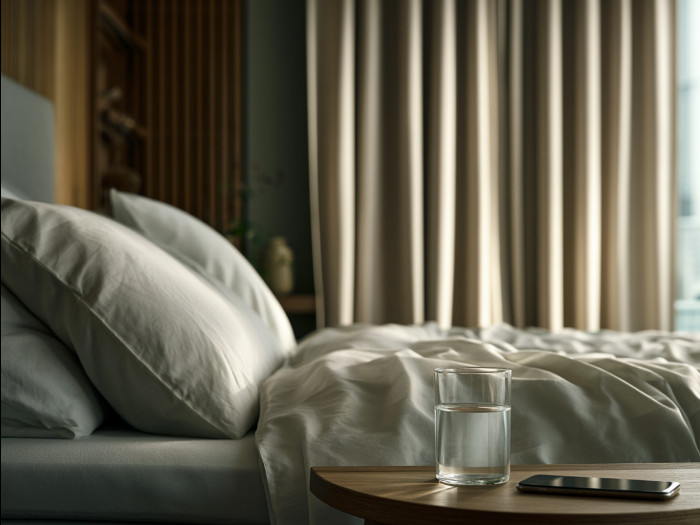
It doesn't have to be anything complicated. After you get home, drink a glass of water, dim the lights, put your phone aside, and breathe slowly and steadily for a few minutes. If you can, draw the curtains or use an eye mask. A ritual repeated every day helps create a sense of safety and predictability, which matters just as much for falling asleep as tiredness itself.
A short meditation can be part of this ritual. It won't put you to sleep in a few seconds, but it can calm the stream of thoughts that, after a demanding shift, can be just as exhausting as the work itself.

You don't need to sleep longer. You need to sleep better.
People who work shifts often hear well-meant advice: “Just catch up on sleep at the weekend.” But sleep isn't an account you can simply top up. Far more important than the occasional long lie-in is regular, high-quality rest after every shift.
When you manage to create the conditions for falling asleep more calmly, the change shows in more than just less tiredness. You tend to be more patient, concentrate better, handle difficult situations with greater calm, and after waking you no longer feel even more tired than before you went to sleep.
Night shifts themselves will not go away. We can, however, change the way we look after our body and mind afterwards.
In closing
Working at night is demanding because it goes against the natural rhythm of our body. That makes it all the more important to create your own rituals that help the brain understand that it is time to rest. They don't have to be long or complicated. Sometimes a darkened room, a phone switched off, a glass of water, and a few calm breaths are enough.
Sleep after a night shift may never feel the same as sleeping at night. It can, however, be calmer, deeper, and enough to give you your strength back for the next day.
Calmory recommends
After coming back from a night shift, don't rush straight to bed. First drink a glass of water, dim the lights, put your phone aside, and give yourself two to three minutes of mindful breathing or a short meditation. Repeat the same steps after every shift. It is this regularity that helps the body form a new habit and fall asleep with greater calm, even when a new day is just beginning outside.

Calmory Author Team
We are a team of writers who believe in the power of stories and honest emotional sharing. We focus on topics related to mental health, personal growth, and everyday life as it is truly lived. We write with respect, openness, and humanity. Our texts come from personal experiences, from the heart, and from ordinary situations that we all go through.
Klid se dá naučit.
Začněte s Calmory ještě dnes.
Dostupné nyní pro iOS a Android

Naskenujte QR
a stáhněte si aplikaci