Does an employee have a right to a moment of calm? Mental hygiene and the Czech Labour Code
Can an employee take two minutes of calm during working hours? The Czech Labour Code does not mention meditation, yet it creates space for protecting employees' health. A short meditation break does not have to mean wasted time or a breach of work duties. On the contrary, it can help people work with more focus, more safely, and with greater perspective.

"Are you already sleeping here?"
A sentence said with a smile. A colleague has just walked past a desk where an employee had their eyes closed for two minutes. They had not fallen asleep. They had simply taken a short pause, during which they focused on their breath. Even so, a situation like this feels odd to many people. Coffee during working hours we take for granted, just like a short chat in the kitchen or a trip to get a glass of water. But when someone takes two minutes of silence, it can cause embarrassment.
Perhaps that is because we associate rest mainly with the body. And yet it is our mind that tends to be the most loaded during the working day. It thinks, decides, solves problems, responds to new information, and jumps between tasks. So the question arises whether, during working hours, a person has a right to a short moment that helps settle the mind.
Does an employee have a right to a moment of calm during working hours?
If you looked in the Czech Labour Code for a chapter on meditation, you would not find one. The law does, however, speak very clearly about protecting employees' health and about the employer's duty to create safe working conditions. And today we already know that health is not made up of physical fitness alone. It also includes mental well-being and the ability to cope with long-term strain.
Of course that does not mean anyone can rest for half an hour whenever they like during a shift. A short meditation pause, though, is not at odds with work performance, as long as it does not disrupt operations or the fulfilment of work duties. In essence it is not very different from the moment when someone stands up from the computer, stretches their back, or goes to get a glass of water. The only difference is that this time it is our mind that gets a chance to rest.
Mental health is part of health
Only a few years ago, mental well-being at work was spoken about rather marginally. Today, employers and professional institutions alike point out that long-term stress, exhaustion, or burnout pose a significant risk for employees and employers. Preventing these problems is always easier than dealing with their consequences.
You may know someone who is first in at work, last to leave, and cheerfully claims they have no time for lunch. At first glance they look like the ideal employee. After a few months or years, though, it can become clear that the high pace had a cost. Performance is not a race in which the winner is the one who lasts the longest without rest. In the long run, it is supported more by the ability to recognise the moment when it is time to slow down for a while.

Two minutes that can change the rest of the day
Meditation is usually much simpler than most people imagine. You don't have to go off to a quiet room or find half an hour of free time. It is enough to sit comfortably, rest your feet on the floor, and follow your breath for a few moments. When your thoughts run off to an unfinished project or an afternoon meeting, simply bring them back. That return is the essence of the whole meditation practice.
Two minutes may not change the work plan or the number of emails in the inbox. They can, however, change the way you think about the next task. Many people describe being able to concentrate better after a short meditation pause, communicate more calmly, and decide more quickly. The brain sometimes does not need more time. It just needs a brief chance to breathe out.

When company culture changes
The view of rest during working hours is gradually shifting. It used to be almost a mark of hard work to boast that you skipped lunch or sat in the office late into the evening. Today, more and more employers realise that real performance grows from a healthy balance between focus and recovery.
Managers play a large role in this. If they themselves respect the value of short breaks and create an environment in which looking after mental health is not seen as a sign of laziness, they can contribute significantly to the well-being of the whole team. They don't have to build relaxation rooms or buy expensive programmes. Often it is enough to change the view of what well-done work actually means.
In closing
Looking after your own mind is not a sign of weakness, nor a lack of work commitment. It is part of a healthy working life. The Czech Labour Code does not mention meditation directly, but its aim is to protect employees' health. A short pause during the working day can be one of the simplest ways to put that idea into everyday practice.
Calmory recommends
Try, during tomorrow's working day, to find two minutes just for yourself. You don't need a special place or complicated techniques. It is enough to slow down for a moment and give attention to your own breath. It is from small moments like these that habits grow — habits that help you handle the workload with more calm.
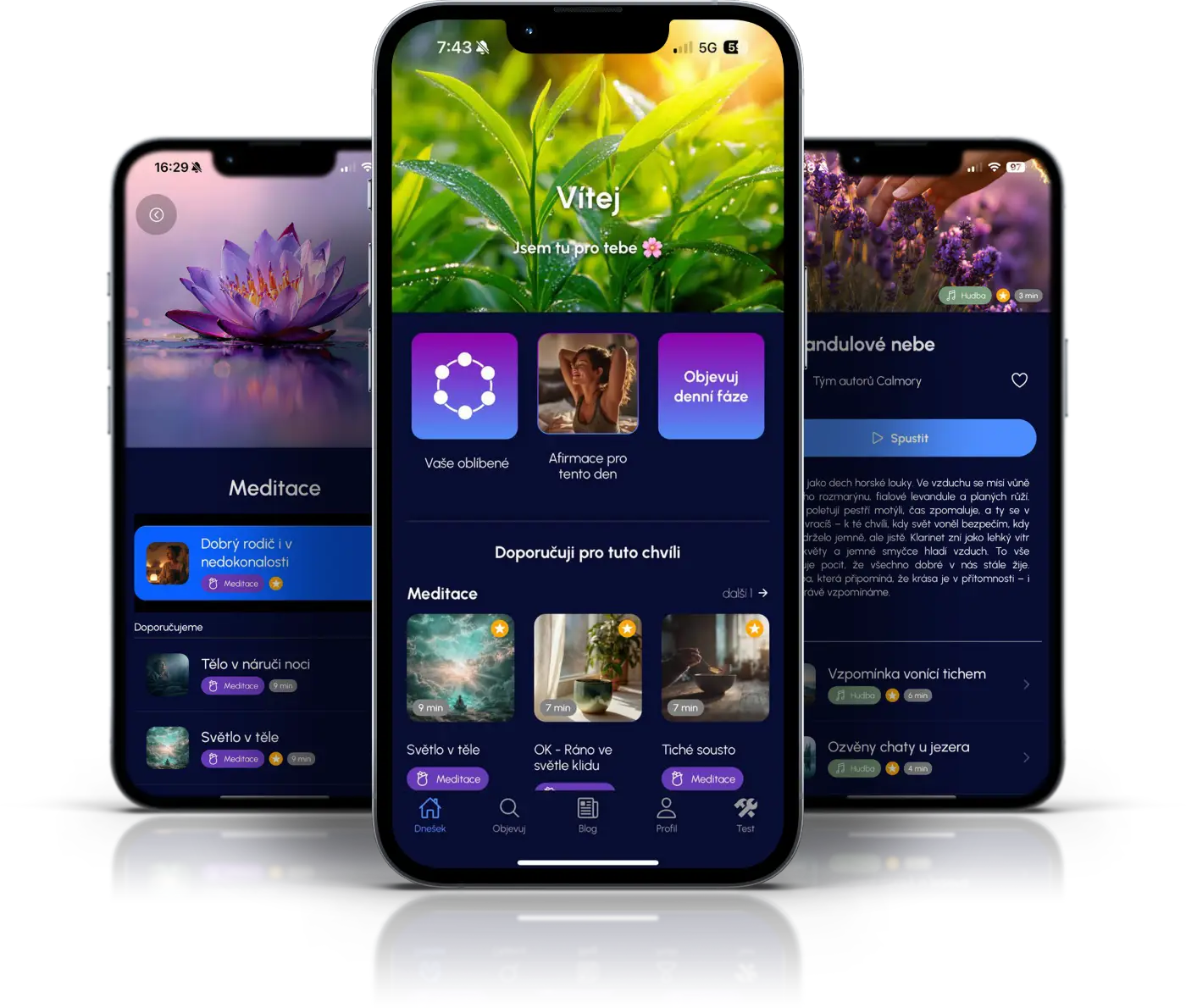
Try the short meditations designed specifically for the working day in the Calmory app.

Calmory Author Team
We are a team of writers who believe in the power of stories and honest emotional sharing. We focus on topics related to mental health, personal growth, and everyday life as it is truly lived. We write with respect, openness, and humanity. Our texts come from personal experiences, from the heart, and from ordinary situations that we all go through.
Klid se dá naučit.
Začněte s Calmory ještě dnes.
Dostupné nyní pro iOS a Android

Naskenujte QR
a stáhněte si aplikaci