Meditation isn't magic, it's training
Many people start meditating with the idea that within a few days they will stop feeling stressed, be free of uncomfortable thoughts, and feel constantly at ease. When that doesn't happen, they often come away thinking they are meditating the wrong way, or that meditation simply isn't for them. In reality, the problem usually lies more in the expectations than in the practice itself.
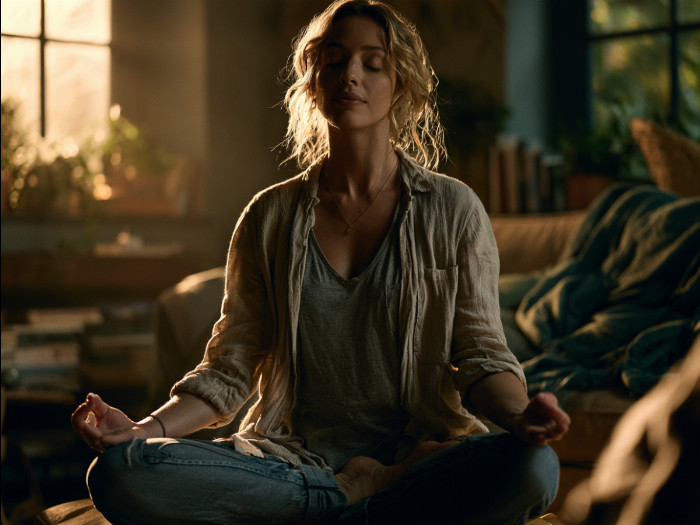
The early days of meditation tend to look surprisingly similar. You play your first recording, settle in comfortably, and expect a pleasant sense of calm. Instead, you suddenly notice how many thoughts are running through your mind. A memory of a work meeting, tomorrow's to-do list, or the question of what's for dinner. Some people conclude in that moment that meditation doesn't work. Others feel they simply don't know how to do it. And yet that is often exactly when they start doing what they are meant to do.
Meditation is not a way to switch the brain off or enter a special state of consciousness. It is much more like training. Just as we gradually build fitness through sport, in meditation we develop certain mental skills. They need time, repetition, and patience.
Do I need an empty mind?
This is one of the most common questions from beginners. The image of someone sitting in complete silence without a single thought is very widespread. Reality is usually different. The brain produces thoughts as naturally as the heart pumps blood or the lungs take care of breathing.
The aim of meditation, then, is not to get rid of thoughts. The point is to notice that they arise, and to learn to relate to them a little more consciously. Imagine sitting on a bench by the road and watching the cars go by. You don't have to run after every one of them, or climb inside. You can approach thoughts in a similar way. They come and they go. Sometimes they are pleasant, sometimes they are not. Meditation teaches us that we don't have to react to every one of them.
The moment you realise you have got lost in thinking, and you bring your attention back to the breath, you have not made a mistake. On the contrary, you have just practised one of the most important parts of meditation.
Why isn't it about performance?

Most things in life can be measured. We see the results of our work, the number of steps, the kilometres run, or grades at school. Meditation works a little differently. There is no right number of thoughts per minute, nor an ideal level of calm we should reach. Even so, many people create their own scoring system. Today it went well. Today it was bad. Today I was calm. Today I failed. That kind of judging often creates unnecessary pressure. Meditation is not a competition, nor a discipline in which you can win a medal for the best performance.
Sometimes you will feel focused and calm. At other times the mind will be restless and scattered. Both are part of the process. What matters is not achieving a perfect result, but regularly creating space for attention and for pausing.
What if it isn't working?
Practically everyone who meditates has at some point felt that it isn't working. Some are distracted by constant thoughts. Others have a sore back. Still others feel they cannot stay still for even a few minutes during meditation. All of these are ordinary experiences. It may help to remember that meditation is not a test of ability. There is no need to perform, or to prove anything. Every pause, every conscious breath, and every return of attention has meaning.
Sometimes it is useful to shorten the length of the meditation. Five minutes a day often brings more than half an hour we have to force ourselves into. Regularity usually matters more than length.
How do I know that meditation is working?

Most of the changes do not show up during the meditation itself. More often we notice them in everyday life. You may find that an unpleasant remark doesn't throw you as quickly as it used to. You may return to work more easily after an interruption, or notice sooner that you are stressed.
These are not dramatic transformations. Often they are small things we would overlook at first glance. When they start to repeat, though, they gradually make a noticeable difference in how we experience everyday situations. That is why meditation is often compared to long-term training. The results are made up of many small steps that slowly add up.
What to take from this article
Meditation is not a magic technique that will remove all worries or stop the flow of thoughts. It is a skill we develop in much the same way as patience, focus, or physical fitness. It is not about perfection or performance. What matters is the willingness to return again to the present moment, and to give yourself space for a regular pause.
Try it in Calmory
Just starting with meditation? Choose one of the short meditations for beginners in the Calmory app and give yourself a few minutes of calm, without any pressure to perform.

Calmory Author Team
We are a team of writers who believe in the power of stories and honest emotional sharing. We focus on topics related to mental health, personal growth, and everyday life as it is truly lived. We write with respect, openness, and humanity. Our texts come from personal experiences, from the heart, and from ordinary situations that we all go through.
Klid se dá naučit.
Začněte s Calmory ještě dnes.
Dostupné nyní pro iOS a Android

Naskenujte QR
a stáhněte si aplikaci